
Who Should and Shouldn’t Use Prostavive? A Clear Usage Guide
Many people researching prostate supplements ask who should use Prostavive and whether it fits their age-related urinary and Prostate Health needs.
Men researching prostate supplements often want to know whether a formula is appropriate for their specific situation.
Not every supplement is designed for the same audience, and understanding who a product is intended for can help set realistic expectations and avoid misuse.
This page explains who may consider Prostavive, who should be cautious, and how it is typically positioned in discussions around prostate and urinary health.
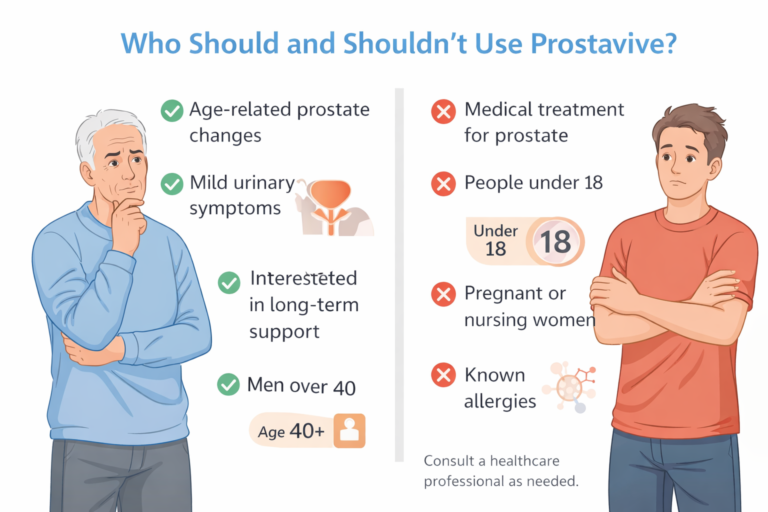
Who Should Use Prostavive?
Prostavive is commonly discussed in the context of age-related prostate and urinary changes, rather than acute or medical conditions.
It may be considered by adult men who experience:
mild changes in urinary flow
increased nighttime urination
general urinary discomfort associated with aging
interest in long-term prostate health support
In most cases, supplements like Prostavive are positioned as part of a preventive or supportive wellness routine, not as a treatment.
Who Should Use Prostavive for Age-Related Prostate Changes?
Prostate size and function often change gradually with age.
Men over 40 are frequently the group researching prostate supplements, especially when lifestyle adjustments alone no longer feel sufficient.
Prostavive is typically discussed as:
a nutritional supplement
designed for consistent, long-term use
focused on supporting normal prostate and urinary function
These formulations are generally not intended to produce immediate results but to support gradual balance over time.
Who Should Avoid Using Prostavive?
While dietary supplements are widely used, they are not suitable for everyone.
Prostavive may not be appropriate for:
individuals under 18
women, including those who are pregnant or nursing
people with known allergies to botanical ingredients
individuals currently undergoing medical treatment for prostate conditions without professional guidance
Anyone with a diagnosed medical condition should consult a qualified healthcare professional before adding any supplement.
Not Intended as a Medical Treatment
It’s important to understand that Prostavive is not marketed as a medication.
It is not intended to:
diagnose medical conditions
treat prostate disease
replace prescribed treatments
provide emergency symptom relief
Instead, it is positioned as a dietary supplement designed to complement healthy lifestyle habits.
Lifestyle Factors Still Matter
Prostate and urinary health are influenced by multiple factors beyond supplementation, including:
hydration
physical activity
sleep quality
overall nutrition
Supplements like Prostavive are commonly discussed as one piece of a broader health strategy, not a standalone solution.
Setting Realistic Expectations
Men considering prostate supplements should understand that:
results may vary
benefits, if any, are typically gradual
consistency matters more than short-term use
This aligns with how long-term wellness supplements are generally evaluated rather than quick-fix products.
How Prostavive Is Typically Used Over Time
Prostavive is commonly discussed as part of a long-term prostate and urinary wellness routine rather than a short-term solution. Consistency, lifestyle habits, and realistic expectations play an important role when evaluating how supplements like Prostavive may fit into daily health practices over time.
Learn More About How Prostavive Works
Understanding who a supplement is for is only part of the decision process.
To explore how Prostavive is formulated to support prostate and urinary health mechanisms, you can read the full explanation here:
Does Prostavive Really Work?
Prostavive Ingredients Explained
Transparency Notice
This content is provided for informational purposes only and does not constitute medical advice.
Dietary supplements are not intended to diagnose, treat, cure, or prevent any disease.
Always consult a qualified healthcare professional before making changes to your health routine.